

Book Review: Mud and Stars by Sara Wheeler
Last time, I wrote about reading travel books I had no intention of reviewing. Then I reviewed the first one, Travels in a Thin Country: A Journey through Chile by Sara Wheeler.
I’ve written a travel book myself [1]and love the genre. I also love armchair travelling—or in this case, lounge-chair travelling. Backyard. Garden. Sunny summer days.
Those gave way to thunderstorms yesterday, hail, wind and fallen tree branches that need clearing away. But for now, another book by Sara Wheeler.
Let’s go to Russia.
___________________________
When I looked up Sara Wheeler’s book about Chile in the library catalogue, I noticed that she’d written a more recent travel book about Russian writers. This one is called Mud and Stars: Travels in Russia with Pushkin, Tolstoy, and Other Geniuses of the Golden Age.
Flipping to the description, I saw that Anton Chekhov was one of the writers. Chekhov is a character in the novel I’ve just finished writing, so I ordered her Russia book along with the one about Chile, opening it as soon as I got home.
In Mud and Stars, Wheeler takes a tour through the lives of Russia’s great 19th century writers–Turgenev as well as Chekhov, Tolstoy et al. Most of their homes are now museums, and Wheeler visits many. She’s shepherded by a series of government tour guides, one handing her off to another, and provides readers with a gloss on each writer’s work. Meanwhile, she bunks down in home-stays, studies Russian, heads off on hikes and cooks her family classic dishes from a White Russian cookbook. And if all this sounds uninspiring…
Don’t worry, we’ll get to the scandalous part.
It’s true that Mud and Stars is smoothly written, and there are some beautiful passages. When camping with her family in the Caucasus, Wheeler meets Russians hiking by, “three young people who invited us for herb tea, dried wild apricots and hazelnuts—one of them cracked the latter with his hand, which impressed Reg (one of her sons). This nutcracker was talkative, lively, and peculiarly happy, for a Russian.

“Tanya (their guide) later told us he had been sampling the local variety of psilocybin mushrooms. Yet over the course of the week, everyone we met on the trail—maybe two or three groups of three or four hikers a day—offered us something to eat or drink. Russians can seem unfriendly, and rarely ask any questions (a Greek will have details of your divorce out of you in five minutes). But they are often generous.
“We bathed in a waterfall in dappled sunshine. A mist hung low as we picked our spot to settle for the night, each of us bearing an armful of kindling. The boys were dispatched to the lake with containers: One of the joys of camping in this part of the Caucasus is that some of the lakes have drinkable water, so one doesn’t have to cart gallons.”
Yet overall, there’s little of the cheeky humour and adventurous spirit that animates Travels in a Thin Country. It’s true Wheeler is 30 years older when she travels to Russia. But I find even the title to be discouraging,and despite passages of lovely writing, the prose usually feels dutiful and sometimes sour. Why?
The introduction provides a clue.
“I worked on the project with great pleasure for two years,” Wheeler writes, “until a crisis overtook my personal life. I became a former writer. When I eventually roused myself—after a couple more years—and decided life might be worth living, I returned to my Russian notes, of which I had hundreds and hundreds of pages, and my shelves of annotated books.”
Reading that, I assumed that one of the reasons Wheeler had gone back to the project was contractual. She owed her publisher a book, and being forced to write something can curdle the prose.
I also found myself worrying about what she’d gone through, and typed queries into my search engine. Illness? A death in the family? Finding nothing, I kept reading, feeling increasingly puzzled.
Then Wheeler mentioned that her husband was from Canada, which sent me off on another search. It’s a Canadian thing. We need to claim our people. If someone mentions Drake, we’re incapable of not saying, “Of course, he’s from Toronto.” Ryan Reynolds? Vancouver. Joni Mitchell is from Saskatchewan and Captain James T. Kirk of the Starship Enterprise is from Montreal. (William Shatner is, anyway.)
So I searched for “Sara Wheeler’s husband”—and boom.
It’s nasty of me to mention this. Bitchy to write about a book I had problems with. But I’m going to be a bitch because I think there’s a valuable point to be made here about travel writing.
__________________________
Headline in the British rag, the Daily Mirror, from June 8, 2017:
Husband broke his wife’s arm after she boasted about sleeping with another man in marital bed
Peter Graham, 68, may have been trying to give wife Sara Wheeler a “Chinese burn” but broke her arm in three places
Journalist Sam Corbishley writes, “Peter Graham, 68, used both hands to twist Sara Wheeler’s left arm, breaking it in three places, during the row at the £1.5m home they shared at South Hill Park, Hampstead.
“Graham was ‘repeatedly goaded’ by his wife during the row about her affair, Blackfriars Crown Court heard.
“’She had taunted him by saying ‘hit me, hit me, hit me’ and then he gave her wrist a twist just to shut her up,’” said prosecutor Deepak Kapur.
Graham admitted causing grievous bodily harm.
Judge Rajeev Shetty told him: “The circumstances of this case I appreciate are sad and also embarrassing for both you and indeed Ms. Wheeler.
“She had been having what appears to be a lengthy inter-marital affair and indeed on the day of the offence you were having an argument about it.
“This led to both of you drinking…”
Sara Wheeler was reported to have cooperated with police when they were called to the home, “and named the other individual involved.”
When interviewed by police, Graham “’blamed the incident down to alcohol, explaining that he had been drinking to excess to the extent of being an alcoholic in the past.’”
The prosecutor in the case said “’the actual process of the criminal proceedings has had a devastating effect on the family, in particular the two children of the family.’
“The court heard Graham has since moved out of the marital home but still sees his two teenage sons, regularly taking one of the boys to school. He is barred from contacting Ms. Wheeler but is allowed to visit the family home on the condition he leaves before she returns.
“Judge Shetty repeated the ‘disastrous effect’ a prison sentence would have on the family unit, particularly on Ms. Wheeler’s ability to travel for work without Graham around to look after their children.
The judge told him: “’You must realise, in case I have to spell it out to you, that assaulting a woman, even in circumstances of extreme stress can never be excused.
“’But I can reach the conclusion that you are not by your nature a violent man and, perhaps more importantly than that, you are not a bully.”
‘Graham was handed an eight-month prison sentence, suspended for 18 months.”
_______________________________
So here’s the crisis in her personal life. I imagine Wheeler didn’t include it in her book since she was indeed enormously embarrassed and no doubt wished to spare her sons further pain.
It’s also true that reviewers shouldn’t presume to tell writers what they ought to have written.
However. For pedagogical purposes.
I can’t help feeling that Wheeler’s marital problems (and subsequent divorce) come through anyway in the sour tone of Mud and Stars. Wouldn’t it have been better to sketch at least the outline of what happened and write the book through that prism? Especially since the Russian writers Wheeler profiles had complicated relationships with their partners, to put it mildly.

Anton Chekhov was tubercular, very handsome and a total dog with women. He finally married an actress not long before his death at 44. Olga Knipper is said to have been the greatest interpreter of his work. She lived mostly in Moscow while Chekhov’s health forced him to live in the milder climate of Crimea. She also kept up her affair in the capital with the theatre director who was her long-time lover, a man whom biographers believe fathered the child she miscarried after her marriage with Chekhov.
Then there’s Ivan Turgenev. Throughout his adult life, Turgenev was in love with a married opera singer, Pauline Viardot. He often lived close to Viardot, her husband and family in Paris, apparently with little drama. This didn’t stop Turgenev from fathering at least two children with serfs, including a son who became a coachman on the estate of one of his friends.
Meanwhile, Leo Tolstoy insisted that his young and virginal fiancé read his diaries before they got married, the entries filled with explicit sexual details of his many affairs. Nevertheless, the first years of their marriage were said to be happy. They subsequently had 13 children, eight of whom survived childhood, although it’s also true that Tolstoy fathered more than a dozen other children with some of the hundreds of serfs on his family estates.
His wife, Sonya, insisted on running Tolstoy’s estate after he grew politically radical, afraid he was going to give everything away and impoverish their children. He eventually left her, dressed as a peasant and travelling in a third-class railway carriage, finally, famously, dying of pneumonia in a small railway station, crowds of fans weeping outside.
Wheeler touches on these complex affairs without getting either personal or particularly insightful. She also reports somewhat distantly on the women she meets in contemporary Russia. I couldn’t help remembering the Mirror’s report that her affair had been “lengthy,” and assumed that marital issues were probably on her mind as she travelled.
Why not get into a few tea-and-gossip sessions with the Russian women she met? Surely Wheeler could have dug into their opinions of the iconic writers’ personal lives, then gone on to pry loose a few thoughts about modern Russian men. I’ve met few women in any country who lack opinions on the subject of men, and what they say—we say—is always informative, usually subversive and runs the emotional gamut from heartbreaking to hilarious.
It also says a great deal about what’s going on in a country.
I recently wrote about another book I read on those sunny days in my lounge chair. This one is by the influential ethnographer Ruth Behar, who makes clear the similarities between her own work in anthropology and travel writing.
In her book, The Vulnerable Observer, Behar writes, “What happens within the observer must be made known…if the nature of what has been observed is to be understood.”
After reading Wheeler, it’s hard not to agree.

Yet Behar offers an important qualification, mentioning one woman’s over-emotional presentation at an anthropology conference she attended.
“A new colleague prefaced her remarks by turning warmly toward me to say my work had given her permission to speak in ways that are taboo in the academy…” Behar writes. “She began to read, first from her ethnographic writing about spirit possession in India, giving detailed and thoughtful descriptions in a cool and controlled voice.
“Suddenly, she switched gears. Her tone grew passionate as she recounted her own experience of being brutally beaten by a former husband in a possession trance. She could not read this section of her work aloud before her voice trembled. Soon the tears came to her eyes. She had to stop several times to catch her breath. By the end, she was sobbing.”
Horrified, Behar tried to find words to respond.
In the end, she found a question.
How, she asked, could researchers make the ethnography they do as moving as their personal stories?
“What would that take? And how might we unsettle expectations by writing about ourselves with more detachment and about others with all the fire of feeling? Can we give both the observer and observed the chance of tragedy?”
Excellent questions for travel writing, too.
_______________________________
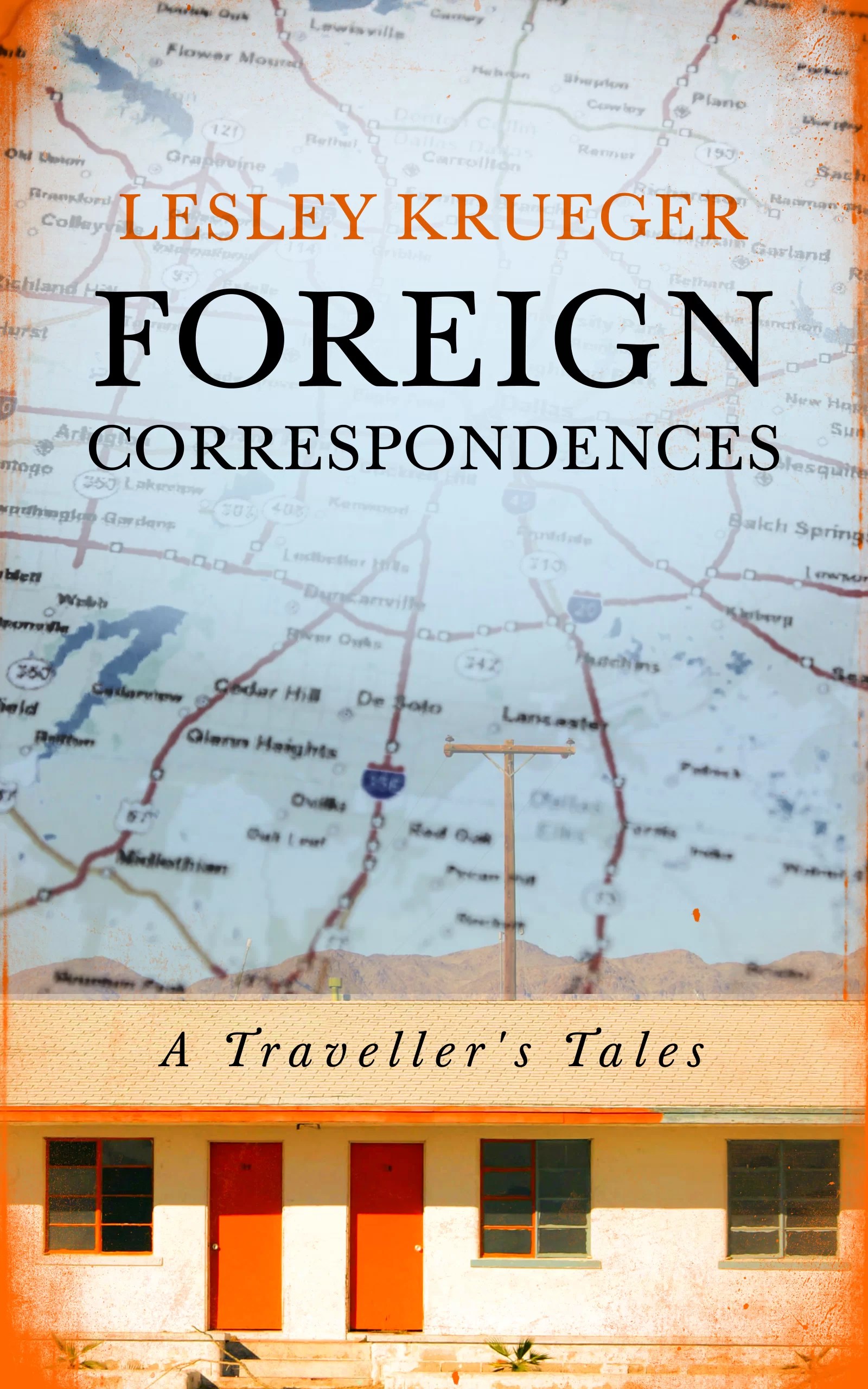
The title of my travel book is Foreign Correpondences, A Traveller’s Tales. Both of my grandmothers were immigrants to Canada, and the book weaves my own stories of life abroad together with my grandmothers’ tales, exploring the idea of home and away. My travels have taken me through India, South America, Mexico, Japan and both the U.S. and Canada. You can order it here.
Travels in a Thin Country by Sara Wheeler is published by Penguin Random House. You can get a copy here, or order it through your local library. If you’re in Toronto, maybe you’ll get the library copy I read, which has been corrected by previous readers.
You can also link to the review I did of it here.
Please click here to order a copy of Mud and Stars: Travels in Russia with Pushkin, Tolstoy, and Other Geniuses of the Golden Ageby Sara Wheeler. It’s published by Vintage.
Her title comes from a line in Turgenev’s novel, Fathers and Sons. “We sit in the mud, my friend, and reach for the stars.” Wheeler uses the quote as an epigraph.
You can read the entire article in the Daily Mirror here.
Ruth Behar’s book, The Vulnerable Observer: Anthropology That Breaks Your Heart is published by Beacon Press. You can order it here.
Behar writes, “I was drawn to anthropology’s incessant journeys and voluntary periods of exile, its constant movement between places, its desire to find magic and enchantment elsewhere…To live between homes, between languages, made sense to me… That I could pursue this state of in-betweenness as a profession seemed incredible.”
Thanks for reading Alive to the World! Subscribe for free to receive new posts and support my work. And if you feel the urge, please restack this story. That’s how writers’ work gets out these days.